
Home during hot weather
How to keep a home cooler without wasting energy
A sensible hot-weather routine starts with the basics: block solar heat, ventilate at the right time and operate cooling equipment in a closed space. Smart-home controls can reinforce these habits, but they do not replace them.
Updated 25 June 2026
1. Close blinds and curtains before the room heats up
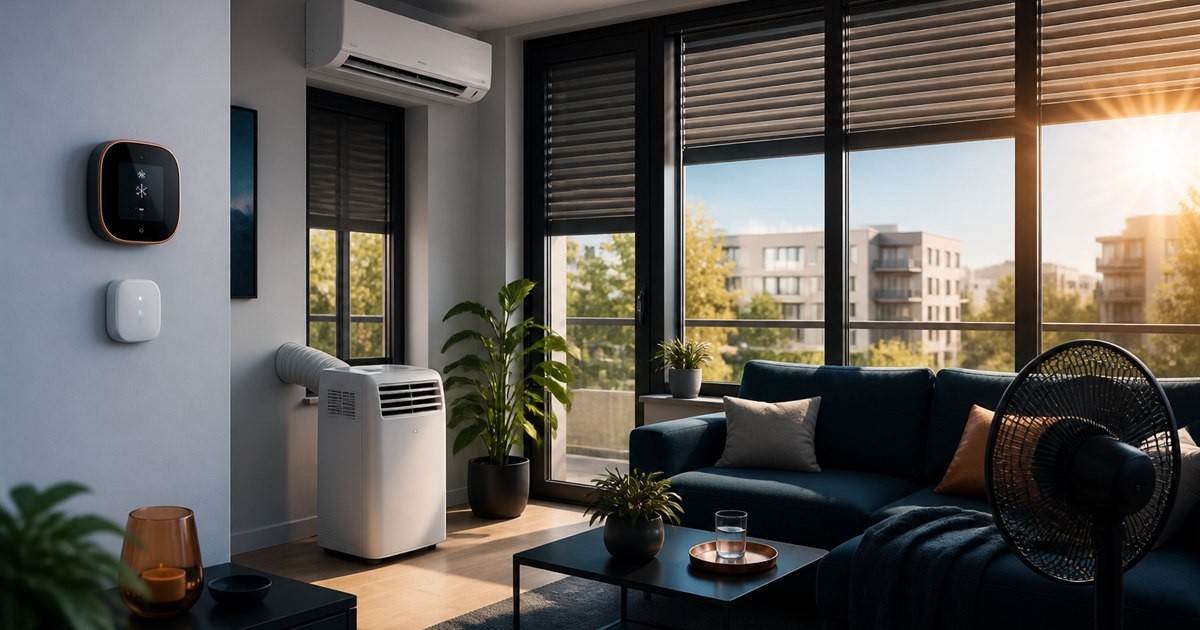
South- and west-facing windows bring substantial heat into a home during the afternoon. Shade them before sunlight heats the room's surfaces. Exterior shading is usually most effective, but indoor curtains and blinds help too.
2. Ventilate only when outdoor air is cooler
Open windows at night or early in the morning when the outdoor temperature is lower than indoors. Close them as the day becomes hotter. When air conditioning or another cooling unit is operating, keep windows and exterior doors closed unless the appliance instructions require otherwise.
3. Use fans and cooling equipment for the right purpose
A fan improves comfort by moving air across people, but it does not meaningfully cool an empty room. Use a moderate target temperature for air conditioning, keep filters clean and make sure furniture or textiles do not block airflow.
4. Reduce heat produced inside the home
Ovens, tumble dryers, powerful computers and unnecessary lighting add heat indoors. Move hot household tasks to cooler hours, switch off equipment that is not needed and avoid producing extra heat during the hottest part of the day.
5. Monitor humidity as well as temperature
High humidity makes heat feel more uncomfortable even when the temperature stays the same. Temperature and humidity measurements help identify whether the problem is heat, moisture or both. Do not automatically run a humidifier during hot weather without a measured need.
6. Smart controls can reinforce good habits
Automation can close blinds before strong sun, pause cooling when a window is open and respond to temperature, humidity and occupancy. If your electricity contract follows hourly prices and the home can tolerate gentle pre-cooling, some cooling can be shifted to cheaper hours without compromising comfort or safety.
Start with measurements, not another device
Even one temperature and humidity sensor can show which room becomes hot and when. That makes it easier to decide whether curtains, ventilation and existing equipment are enough or whether additional control or cooling is justified.